Introduction
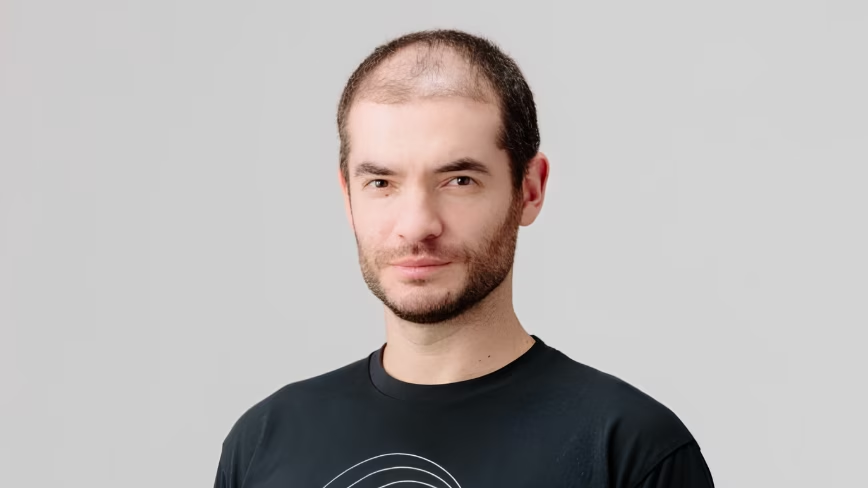
When a key figure like Ilya Sutskever – former chief scientist of OpenAI and now head of Safe Superintelligence Inc. – reveals under oath a personal stake worth $7 billion in the company he helped build, it sends shockwaves through both the tech and legal worlds. This disclosure emerged during the high-profile litigation between Elon Musk and OpenAI, and understanding its full significance requires a structured approach. This guide will walk you through the essential steps to dissect the news, grasp the valuation context, and appreciate what it means for the future of AI governance. By following these steps, you’ll move beyond the headline and see the strategic implications for all parties involved.
What You Need
- Basic understanding of the OpenAI structure (nonprofit vs. capped-profit) and its shift under Sam Altman.
- Familiarity with the Musk-OpenAI lawsuit – its origins, key claims, and current status.
- Knowledge of equity valuations – how private company stakes are estimated, especially for AI startups.
- Access to court documents or reliable summaries of the testimony (e.g., from The Next Web or legal filings).
- An interest in AI industry dynamics – the roles of key personalities like Sutskever, Musk, and Altman.
Step-by-Step Guide
Step 1: Understand the Background of the Musk-OpenAI Litigation
Begin by grounding yourself in the lawsuit. Elon Musk, a co-founder of OpenAI, sued the company in early 2023, alleging that it had abandoned its original nonprofit mission and become a profit-driven entity under Microsoft’s influence. Musk claims this violates the founders’ agreement. During the discovery process, both sides gather witness testimony. Ilya Sutskever’s deposition on a Monday in late 2024 (reported by The Next Web) is part of that evidence gathering. Knowing the timeline and core arguments helps you understand why his stake became a focal point: it directly ties to questions of ownership, control, and financial incentives within OpenAI.
Step 2: Identify Ilya Sutskever’s Role and Transition
Sutskever was OpenAI’s chief scientist until a notable shift in leadership dynamics. He left to found Safe Superintelligence Inc. (SSI), a startup focused on safe AI development. His departure was seen as a response to disagreements over OpenAI’s direction. In the litigation, his testimony is crucial because he has intimate knowledge of internal decisions and compensation structures. The fact that he voluntarily disclosed his OpenAI stake – reported as $7 billion – demonstrates a high level of transparency under oath. Recognize that he is not an adversary in the lawsuit but a witness with deep insider perspective.
Step 3: Examine the Stake Disclosure Details
Focus on the numbers and context. Sutskever stated under oath that his ownership stake in OpenAI is worth approximately $7 billion. This valuation likely reflects the latest funding rounds or secondary market valuations (e.g., OpenAI’s valuation was around $80-90 billion at the time). As a former chief scientist, he likely accumulated shares through early employee grants and possibly additional equity. The disclosure places him among the largest individual shareholders in the company, alongside co-founder Sam Altman and others. Verify if the stake includes vested and unvested shares, and whether it covers both the for-profit and nonprofit arms. Court testimony is signed under penalty of perjury, so these figures carry legal weight.
Step 4: Evaluate the Stake’s Valuation and Implications
Now analyze what $7 billion means. Compare it to OpenAI’s overall valuation (estimated at $80-90 billion pre-money). That would give Sutskever roughly 8-9% ownership – a significant block. Such a large individual stake raises questions about control: does he have voting rights? Could this influence his actions at Safe Superintelligence Inc.? Also consider the timing: disclosing this during the Musk lawsuit could be strategic. It might show that OpenAI’s early experts were generously compensated, possibly countering Musk’s claims that the company’s for-profit turn was not in the founders’ best interests. Alternatively, it could highlight the immense wealth concentrated at the top, fueling debates about equitable distribution.
Step 5: Consider the Broader Impact on OpenAI’s Governance and Future
Finally, step back and look at the big picture. The disclosure affects multiple stakeholders: OpenAI’s board (nonprofit oversight), investors (Microsoft, venture firms), employees (who may feel undervalued), and regulators (only taxes but also antitrust concerns). Sutskever’s stake is a tangible asset that ties him to OpenAI’s success even after his departure. For the lawsuit, it provides ammunition for either side – Musk could argue that Altman concentrated wealth, while OpenAI could argue that early talent was rewarded. For the AI community, it underscores the massive financial stakes in AGI development and the tension between safety research and profit motives. Stay tuned for additional filings or interviews that may expand on this.
Tips for a Deeper Understanding
- Cross-reference other sources – The Next Web article is a starting point; check reputable legal and tech outlets (e.g., Reuters, The Verge) for more details.
- Look for court document updates – The exact testimony transcript may become public; search for “Musk v. OpenAI – Ilya Sutskever deposition.”
- Compare with other key players – Sam Altman’s known stake (reportedly around 2-5%) puts Sutskever’s in perspective.
- Understand valuation methodologies – Private company valuations are volatile; the $7bn figure might change with future rounds or exits.
- Follow Safe Superintelligence Inc. – Sutskever’s new venture may reveal his intentions and whether he will reduce his OpenAI stake.
- Watch for regulatory reactions – Large stakes in AI companies could attract antitrust scrutiny; this disclosure might be filed with the SEC if OpenAI goes public.